


Dealership blog
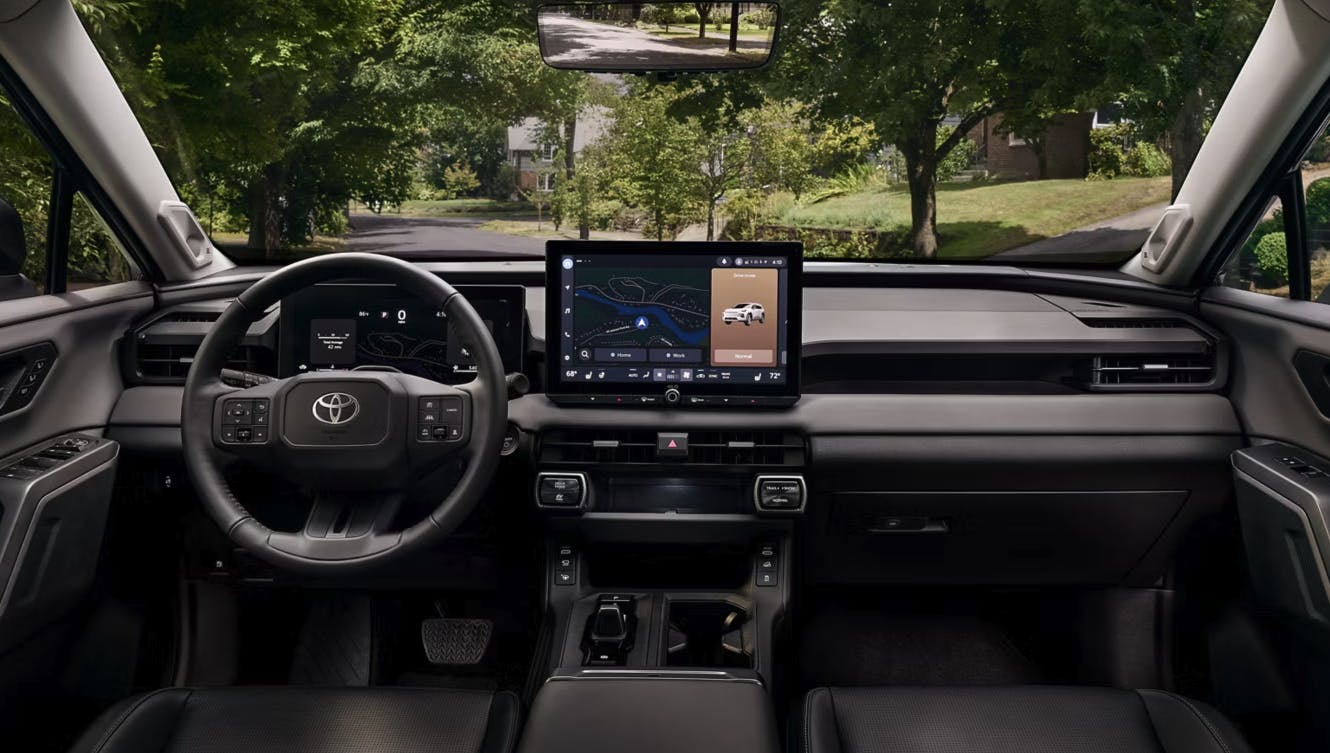
2026 Toyota RAV4 Hybrid vs. RAV4 Plug-in Hybrid: Which Fits Your Mobile Commute?
Springhill Toyota 2026 RAV4 Powertrain Guide
Upfront Price vs. Long-Term Fuel Savings: Which SUV Delivers Better Value?
Compare the 2026 Toyota RAV4 Hybrid and RAV4 Plug-in Hybrid on Toyota-estimated efficiency, electric range, and charging to see which fits your Mobile-area commute.
Quick Answer: Which RAV4 Powertrain Fits Your Commute?
The 2026 Toyota RAV4 is sold only as a hybrid or plug-in hybrid in the U.S., so the choice is between the RAV4 Hybrid and the RAV4 Plug-in Hybrid. The RAV4 Hybrid never needs a plug and has Toyota-estimated combined fuel economy of 38 to 43 MPG depending on trim, which suits drivers without reliable home or workplace charging. The RAV4 Plug-in Hybrid adds a larger battery with a manufacturer-estimated all-electric range of 48 to 52 miles and 324 net combined horsepower, which suits drivers who can charge overnight and whose daily mileage stays inside that range.
The question that decides most cases is simple: can you plug in regularly where you live or work? If you can, the Plug-in Hybrid lets many Mobile-area commutes run on electricity. If you cannot, the RAV4 Hybrid delivers strong efficiency without changing how you fuel up. This article uses Toyota’s published U.S. figures for the 2026 model year, and every MPG and range number is an estimate from Toyota rather than an EPA rating.
What Is the Difference Between a Hybrid and a Plug-in Hybrid?
Definition: A hybrid, like the RAV4 Hybrid, pairs a gas engine with an electric motor and a small battery that recharges itself through braking and engine power, so it never needs to be plugged in. A plug-in hybrid, like the RAV4 Plug-in Hybrid, uses a larger battery that can also be charged from an outlet or charging station, which lets it drive on electric power alone for a limited distance before it switches to hybrid operation. For a Mobile-area driver, the practical difference is fueling: one is filled at the pump like any other vehicle, and the other can be charged overnight so short trips rarely use gas.
Both systems work the same way once the engine is needed: the gas engine and electric motor share the load, and regenerative braking returns energy to the battery. The difference is battery size. The plug-in hybrid’s battery is large enough to justify a wall connection, and that is what makes meaningful electric-only driving possible.
Table of Contents
- Quick Answer: Which RAV4 Powertrain Fits Your Commute?
- What Is the Difference Between a Hybrid and a Plug-in Hybrid?
- RAV4 Hybrid: Trims, Power, and Efficiency
- RAV4 Plug-in Hybrid: Electric Range and Charging
- Side-by-Side Comparison
- Which One Fits Your Mobile-Area Commute?
- A Rough Look at the Price Gap and Fuel Savings
- What the Powertrain Choice Does Not Change
- Talk to Our Team About a RAV4 Test Drive
- Key Takeaways
- FAQ
RAV4 Hybrid: Trims, Power, and Efficiency
The 2026 RAV4 begins the sixth generation, and Toyota says the lineup has moved to 100% electrified powertrains. That means there is no gas-only RAV4 to compare against. Every RAV4 you can buy new has an electric motor, and the Hybrid is the version that works without charging.
The RAV4 Hybrid comes in six trims: LE, SE, XLE Premium, Woodland, XSE, and Limited. Net combined output is 226 horsepower with front-wheel drive and 236 horsepower with all-wheel drive. All-wheel drive is optional on LE, SE, and XLE Premium, and standard on XSE, Limited, and Woodland, so it is worth confirming drivetrain when you compare trims.
Toyota’s U.S. figures for the 2026 RAV4 Hybrid list 43 MPG combined for front-wheel-drive models, 42 MPG combined for LE and SE with all-wheel drive, 41 MPG combined for XLE Premium with all-wheel drive, 42 MPG combined for XSE and Limited, and 38 MPG combined for Woodland. These are Toyota-estimated numbers, not EPA-confirmed ratings. Net combined output is 226 horsepower with front-wheel drive and 236 horsepower with all-wheel drive, from a system whose engine produces 163 lb-ft of torque.
The table below shows the full set of Toyota-estimated fuel economy figures and starting prices for each hybrid configuration.
| Trim and Drivetrain | City / Highway / Combined MPG (Toyota-estimated) | Starting MSRP |
|---|---|---|
| LE (FWD) | 47 / 40 / 43 | $31,900 |
| SE (FWD) | 47 / 40 / 43 | $34,700 |
| XLE Premium (FWD) | 47 / 40 / 43 | $36,100 |
| LE and SE with AWD | 45 / 39 / 42 | Varies by trim |
| XLE Premium with AWD | 45 / 38 / 41 | Varies by trim |
| Woodland (AWD) | 41 / 35 / 38 | $39,900 |
| XSE (AWD) | 43 / 31 / 42 | $41,300 |
| Limited (AWD) | 43 / 31 / 42 | $43,300 |
Starting prices are Toyota’s MSRPs for the 2026 RAV4 Hybrid and exclude the $1,095 processing and handling fee, taxes, and options. Pricing changes, so confirm the current figure for a specific trim with our team before you plan around it.
The 2026 all-wheel-drive hybrid’s 236 horsepower is up from 219 horsepower on the previous generation’s all-wheel-drive hybrid.
RAV4 Plug-in Hybrid: Electric Range and Charging
The RAV4 Plug-in Hybrid starts from the same idea and adds a high-capacity traction battery that can be charged from a household outlet, a Level 2 charger, or, on some trims, a DC fast charger. It operates as a short-range electric vehicle for daily driving, then switches to hybrid operation automatically when the battery is depleted or when you ask for more power, such as merging onto I-10.
It comes in four trims: SE, XSE, Woodland, and GR SPORT. All-wheel drive is standard on all of them, and net combined output is 324 horsepower. Toyota’s manufacturer-estimated all-electric range is 52 miles for SE and XSE, 49 miles for Woodland, and 48 miles for GR SPORT. After the battery is depleted, Toyota’s estimate for the SE and XSE is 40 MPG combined, with slightly lower figures for Woodland and GR SPORT.
Charging hardware differs by trim, and that detail matters for anyone planning around public charging.
| Charging Detail | SE and GR SPORT | XSE and Woodland |
|---|---|---|
| Onboard AC charger | 7 kW | 11 kW |
| Charge port | J1772 | CCS1 |
| DC fast charging | Not offered | Yes |
| Toyota-published charging time | About 4 hours for 10% to 80% on Level 2 | About 30 minutes for 10% to 80% on DC fast charging, under ideal conditions |
| Starting MSRP | SE $41,500; GR SPORT $48,500 | XSE $47,200; Woodland $45,300 |
Toyota has not published the plug-in hybrid battery capacity in kilowatt-hours or an MPGe rating on the U.S. pages used for this article, so neither appears here. A 120-volt household outlet will recharge the battery, but slowly, which is why a 240-volt Level 2 charger installed in a garage is the more realistic setup for a household that wants to use the electric range every day. Prices exclude the $1,095 processing and handling fee, taxes, and options, and you should confirm current pricing and availability with our team.
Side-by-Side Comparison
The table below puts the two powertrains next to each other using Toyota’s published U.S. information for the 2026 model year.
| Feature | RAV4 Hybrid | RAV4 Plug-in Hybrid |
|---|---|---|
| Needs to be plugged in | No | Yes, to use electric-only range |
| Trims | LE, SE, XLE Premium, Woodland, XSE, Limited | SE, XSE, Woodland, GR SPORT |
| Net combined horsepower | 226 (FWD), 236 (AWD) | 324 |
| Drivetrain | FWD or AWD depending on trim | AWD standard |
| Combined MPG (Toyota-estimated) | 38 to 43 | 37 to 40 after the battery is depleted |
| All-electric range (manufacturer-estimated) | Not applicable | 48 to 52 miles |
| Starting MSRP range | $31,900 to $43,300 | $41,500 to $48,500 |
| Hybrid battery warranty (Toyota-published) | 10 years or 150,000 miles | 10 years or 150,000 miles |
| Best fit | Drivers without reliable charging | Drivers who can charge at home or work |
The Plug-in Hybrid’s after-depletion MPG is similar to the Hybrid’s, so the real difference shows up in the miles you drive on electricity. Confirm the exact warranty terms for the vehicle you are buying with our team.
Which One Fits Your Mobile-Area Commute?
For most Mobile-area drivers, charging access matters more than any specification. A commute from Tillmans Corner into downtown Mobile is roughly 10 to 12 miles each way, so a round trip of 20 to 24 miles fits well inside the 48 to 52 mile manufacturer-estimated electric range and could run on electricity alone when the battery starts full. A commute from Loxley or Robertsdale into Mobile runs roughly 30 to 40 miles each way, so a round trip of 60 to 80 miles exceeds that range and relies on the hybrid system for part of every day, which narrows the Plug-in Hybrid’s advantage.
Three household patterns show how that plays out. A driver in Tillmans Corner, Theodore, or midtown Mobile with a garage or driveway can plug in overnight, run the commute and most errands on electricity, and keep the gas engine for longer weekend drives. A driver coming in from the Eastern Shore, Loxley, or Robertsdale covers more miles than the electric range allows, and the RAV4 Hybrid delivers similar Toyota-estimated fuel economy on a long drive at a lower starting price. A household using the RAV4 as a second vehicle for school drop-off and errands around Mobile or Baldwin County may cover nearly all of its driving on electricity if it has a place to charge.
| Commute Scenario | Round-Trip Distance | Better-Suited Powertrain |
|---|---|---|
| Short urban commute, such as Tillmans Corner to downtown Mobile | About 20 to 24 miles | Plug-in Hybrid, if home charging is available |
| Longer regional commute, such as Loxley or Robertsdale to Mobile | About 60 to 80 miles | Hybrid, since electric range will not cover the round trip |
| Second vehicle for errands and school runs | Low daily mileage | Plug-in Hybrid, with garage or driveway charging |
| Apartment or condo without dedicated charging | Any | Hybrid, since daily charging is not practical |
Distances are approximate. Real-world electric range changes with speed, load, and temperature, and running the air conditioning hard through a Gulf Coast summer draws on the battery, so treat the manufacturer estimate as a best case.
A Rough Look at the Price Gap and Fuel Savings
This is an illustration, not a quote. The two powertrains do not start at the same price, and comparing them fairly takes some assumptions. The SE grade is offered in both: the Hybrid SE starts at $34,700 with front-wheel drive, and the Plug-in Hybrid SE starts at $41,500 with all-wheel drive standard. The $6,800 difference therefore includes the drivetrain, the larger battery, and the added horsepower, and the gap shrinks if you price the Hybrid SE with all-wheel drive.
Fuel savings can be estimated more cleanly. The table below assumes 12,000 miles a year, a gas price of $3.00 per gallon, 42 MPG for a Hybrid SE with all-wheel drive, and 40 MPG for the Plug-in Hybrid SE once the battery is depleted, using Toyota’s estimates. It shows gasoline only, so you would add the cost of the electricity you use, which depends on your utility rate and on battery details Toyota has not published.
| Share of Annual Miles Driven on Electricity | Plug-in Hybrid Gas Used per Year | Plug-in Hybrid Gas Cost | Hybrid SE AWD Gas Cost (about 286 gallons) | Gas Saved by Plug-in Hybrid |
|---|---|---|---|---|
| 50% | 150 gallons | $450 | $857 | About $407 |
| 75% | 75 gallons | $225 | $857 | About $632 |
| 90% | 30 gallons | $90 | $857 | About $767 |
The takeaway is that a plug-in hybrid rewards regular charging and a commute that fits the electric range. At 75% electric driving, the gas savings in this example come to roughly $632 a year before electricity costs, which is not enough on its own to offset a price gap of several thousand dollars within a few years. For some households the extra power, standard all-wheel drive, and the option to run on electricity for daily driving are the reason to choose the Plug-in Hybrid, and fuel savings are a bonus. For others, the RAV4 Hybrid is the more economical choice. Use your own mileage, gas price, and electricity rate in place of these assumptions, and ask our team to price the exact trims you are comparing.
Federal and state incentive eligibility for plug-in hybrids changes over time and depends on your own tax situation, so check current programs or talk with a tax professional before assuming a credit applies.
What the Powertrain Choice Does Not Change
Choosing between the Hybrid and the Plug-in Hybrid does not change what you get from the rest of the RAV4. Both are the 2026 sixth-generation model, so the interior, safety equipment, and available trims follow the grade you choose rather than the powertrain. If your decision is really about capability or appearance, the Woodland trim is available on both powertrains and is worth a test drive on its own merits.
Hybrid battery coverage is part of the decision even though it rarely comes up first. Toyota’s published terms for the 2026 RAV4 list the hybrid battery at 10 years or 150,000 miles, with hybrid-related components at 8 years or 100,000 miles. Ask our team to confirm the terms for the exact vehicle.
Finally, do not assume the electric range stretches a beach trip. Weekend drives to Gulf Shores, Orange Beach, or the Florida Panhandle are hybrid trips for either vehicle. The Plug-in Hybrid’s range is designed around daily driving with home charging, not around extending a road trip, so the fuel savings come from the daily routine.
Talk to Our Team About a RAV4 Test Drive
The clearest way to feel the difference between these two powertrains is to drive both. Our sales team can walk you through RAV4 Hybrid and RAV4 Plug-in Hybrid availability, confirm current pricing and any offers that apply, and help you match a trim to your commute. Check our current new Toyota inventory or call 251-450-1000 to schedule a test drive of either model.
Key Takeaways
- The 2026 Toyota RAV4 is sold only as a hybrid or plug-in hybrid in the U.S., so there is no gas-only RAV4 to compare against.
- The RAV4 Hybrid never needs to be plugged in and has Toyota-estimated combined fuel economy of 38 to 43 MPG, with 226 or 236 net combined horsepower.
- The RAV4 Plug-in Hybrid has 324 net combined horsepower, standard all-wheel drive, and a manufacturer-estimated electric range of 48 to 52 miles.
- Charging hardware differs by trim: SE and GR SPORT use a 7-kW charger and J1772 port, while XSE and Woodland use an 11-kW charger and a CCS1 port with DC fast charging.
- The Plug-in Hybrid makes the most sense when you can charge regularly and your daily mileage stays within the electric range; the Hybrid fits longer commutes and households without charging.
- Starting MSRPs run $31,900 to $43,300 for the Hybrid and $41,500 to $48,500 for the Plug-in Hybrid, before the processing and handling fee, so confirm current pricing with our team.
Quick Answers Before You Visit
Do I have to plug in the RAV4 Plug-in Hybrid every day?
No. It runs as a hybrid when the battery is depleted, so it will still work if you skip charging. You would lose the electric-only driving that justifies the higher price, so if you do not expect to charge regularly, the RAV4 Hybrid is usually the better value.
Which RAV4 Plug-in Hybrid trims can use a DC fast charger?
Toyota lists a CCS1 charge port with DC fast charging on the XSE and Woodland, with about 30 minutes from 10% to 80% under ideal conditions. The SE and GR SPORT use a J1772 port and a 7-kW onboard charger, with roughly 4 hours for 10% to 80% on Level 2. Because the plug-in hybrid battery is sized for daily home charging, most owners will rely on overnight charging at home.
Is all-wheel drive standard on the RAV4 Hybrid?
It depends on the trim. All-wheel drive is standard on XSE, Limited, and Woodland, and optional on LE, SE, and XLE Premium. All-wheel drive is standard on every Plug-in Hybrid trim. Our team can show you which trims and drivetrains are available when you visit.
Is the RAV4 Plug-in Hybrid faster than the RAV4 Hybrid?
Toyota lists 324 net combined horsepower for the Plug-in Hybrid, compared with 226 horsepower for front-wheel-drive Hybrids and 236 horsepower for all-wheel-drive Hybrids. The extra output is one of the reasons the Plug-in Hybrid costs more. Toyota has not published acceleration times on the U.S. pages used for this article, so a test drive is the best way to compare how each one feels.
Test Drive the RAV4 Hybrid and Plug-in Hybrid in Mobile, AL
Choosing between these two powertrains is a question about your routine, not about which one is better. The RAV4 Hybrid gives you strong Toyota-estimated fuel economy with no change to how you fuel up, and the RAV4 Plug-in Hybrid gives you electric driving for a commute that fits its range, provided you can charge at home or work. If you can plug in and your daily miles are modest, drive the Plug-in Hybrid. If you cannot, the Hybrid gets you most of the efficiency with a lower starting price. Stop by Springhill Toyota at 3062 Government Boulevard in Mobile to drive both, or call 251-450-1000 to confirm current availability.
Helpful Springhill Toyota Links
Related Articles
Keep reading more Toyota shopping, ownership, and Gulf Coast driving guides from Springhill Toyota.
Hybrid Guide
Meet the 2026 Toyota RAV4 Hybrid in Mobile
An introduction to the RAV4 Hybrid for Mobile-area drivers.