


Dealership blog
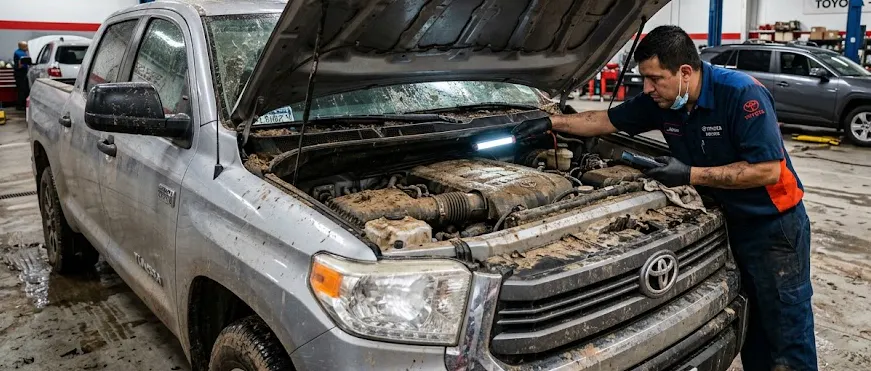
Toyota Flood Damage Inspection After Gulf Coast Storms
Springhill Toyota Post-Storm Service Guide
How to Spot Hidden Water Damage Inside Your Toyota After a Storm
If a Toyota has been exposed to deep standing water, storm surge, or significant flooding, do not assume it is safe to start or drive because the water has receded. Flood damage can affect brakes, fluids, electrical connectors, control modules, bearings, interior safety components, and, in hybrid or electric vehicles, high-voltage systems. The safest next step depends on how high the water reached, whether the vehicle was running, whether saltwater was involved, and whether any electrical or fire warning signs are present.
Quick Answer: Toyota Flood Damage Inspection After Gulf Coast Storms
For Mobile and the Alabama Gulf Coast, this is a practical post-storm issue rather than a theoretical one. Heavy rain and tropical systems can flood roads, parking areas, and low-lying property quickly. The first rule is prevention: never drive into floodwater. If exposure has already happened, the goal shifts from getting the vehicle moving to avoiding additional damage and identifying hazards before anyone restarts, charges, repairs, buys, or sells the vehicle.
Why Flood Exposure Requires Careful Inspection
Definition: A flood-damage inspection evaluates vehicle systems that may have been contaminated, submerged, electrically affected, corroded, or mechanically compromised by water. It is different from a normal maintenance inspection because the technician needs an accurate history of water depth, duration, water type, whether the engine was running, and whether the vehicle is hybrid, plug-in hybrid, or battery electric.
Toyota Flood Damage Inspection Guide for Gulf Coast Drivers
- What to Do After Deep-Water Exposure
- Brake, Electrical, Fluid, and Interior Inspection Areas
- Flood-Damage Warning Signs
- Hybrid and EV High-Voltage Cautions
- Flood Damage When Shopping for a Used Vehicle
- Post-Storm Key Takeaways
- Toyota Flood Damage FAQs
- Request a Post-Storm Toyota Inspection in Mobile
What to Do After Driving Through or Parking in Floodwater
The best response depends on the severity of exposure. A tire passing through a shallow puddle is not the same event as water reaching the floor, wheel hubs, engine intake, electrical connectors, traction battery, or dashboard. If the vehicle was substantially flooded, restarting it can turn a recoverable problem into a larger mechanical or electrical failure. NHTSA advises that flooded vehicles should be thoroughly assessed before startup because damage may not be visible.
If the Toyota is still in floodwater or an area with downed power lines, unstable structures, flowing water, or other hazards, prioritize personal safety and emergency instructions. Do not wade into water to retrieve items from the vehicle. Once the area is safe, document what happened from a safe distance. Photos showing the exterior water line, debris marks, cabin water level, and surrounding conditions can help communicate the exposure to a repair facility and insurer.
- Do not restart a significantly flooded vehicle simply to test it. Water may have entered the engine, fluids, electronics, or high-voltage areas.
- Do not drive through remaining floodwater to reach a service facility. Use a safe recovery or towing method when professional evaluation is needed.
- Record the water level and type of water if known. Freshwater, brackish water, saltwater, and contaminated floodwater can create different corrosion and contamination concerns.
- Tell the technician whether the vehicle was running during exposure. That history can change which systems deserve priority.
- For a hybrid, plug-in hybrid, or EV, disclose any battery warning, unusual heat, smoke, odor, popping sound, or visible battery-area damage immediately.
Brake, Electrical, Fluid, and Interior Areas That May Need Inspection
Flood exposure is a system problem, not just an upholstery problem. Water can reach components that are hidden under carpet, behind trim, inside connectors, around bearings, or within mechanical housings. The inspection scope should be based on the water level and the exact Toyota. A technician should not assume that one checklist fits a Corolla, Tacoma, Sienna Hybrid, RAV4 Plug-in Hybrid, or battery-electric Toyota equally.
| Area | Why Floodwater Matters | Possible Inspection Focus | What the Owner May Notice |
|---|---|---|---|
| Brakes | Water and contamination can affect friction surfaces, corrosion, sensors, and braking consistency. | Brake operation, visible corrosion, components, warning indicators, and condition based on exposure. | Noise, pulling, vibration, unusual pedal feel, warning lamps, or reduced confidence in stopping. |
| Engine and drivetrain fluids | Water contamination can reduce lubrication and damage internal components. | Fluid level, appearance, contamination evidence, leaks, and model-specific service procedures. | Milky or abnormal fluid, unusual noises, warning lights, or drivability changes. |
| Electrical system | Moisture can corrode connectors, short circuits, and create delayed faults. | Modules, connectors, wiring, low-voltage battery system, diagnostic trouble codes, and affected sensors. | Intermittent warnings, inoperative accessories, no-start condition, flickering, or systems behaving unpredictably. |
| Interior and restraints | Water can reach connectors, sensors, seat wiring, carpet padding, and restraint-related components. | Water line, corrosion, odor source, restraint-system warnings, seat electronics, and moisture beneath trim. | Persistent dampness, musty odor, stains, warning lamps, or electrical functions that work intermittently. |
| Wheel bearings and suspension areas | Submersion can introduce water or contaminants into components not intended for extended immersion. | Noise, play, seals, corrosion, and model-specific inspection points. | Humming, grinding, vibration, or changes that appear days or weeks later. |
| Hybrid/EV high-voltage components | Flooding can create electrical shock, short-circuit, and fire risks. | Professional high-voltage assessment using Toyota procedures and safety precautions. | Warnings, heat, smoke, unusual odor or sounds, but hazardous damage may also be less obvious. |
Toyota owner guidance for vehicles such as Prius specifically warns against driving on flooded roads and calls for dealer inspection after flood exposure, including checks of brake function and fluids. The exact post-flood procedure depends on the model. That is why the water history matters as much as the dashboard symptoms. A vehicle can start and move while still having contamination or corrosion that deserves attention.
Saltwater or brackish-water exposure raises the stakes because salt accelerates corrosion and can remain in seams, connectors, underbody areas, and electrical components after the visible water is gone. A vehicle exposed to storm surge should be identified as such when you arrange inspection. Do not describe it simply as “wet carpet” if the water reached mechanical or electrical areas.
Warning Signs That Can Appear After Flood Exposure
Some flood-related problems appear immediately. Others develop as trapped moisture creates corrosion. If the vehicle has a known flood history, a new electrical fault or unusual noise days later should not automatically be treated as unrelated. Give the repair facility the full exposure history so diagnosis starts with the right context.
Signs that justify prompt evaluation include:
- warning lamps for brakes, airbags, hybrid systems, traction battery, charging, engine, ABS, stability control, or other vehicle systems;
- a no-start condition, slow or unusual cranking, or repeated low-voltage electrical problems;
- rough running, stalling, reduced power, or unusual mechanical noise after water exposure;
- brake pulling, grinding, vibration, abnormal pedal feel, or a braking warning;
- intermittent windows, locks, seats, infotainment, cameras, lighting, or driver-assistance features;
- persistent moisture, fogging, damp carpet, staining, mold or mildew odor;
- new humming or grinding that changes with road speed;
- fluid that looks unusual or shows evidence of contamination;
- visible corrosion or residue on connectors, seat hardware, under-dash metal, or other areas that should normally be dry.
Do not wait for every item on that list. Significant submersion itself can be enough reason for professional assessment before startup. Conversely, do not assume every odd smell or warning after a storm proves the vehicle is a total loss. Inspection is how the actual extent of damage is established.
Hybrid, Plug-In Hybrid, and EV Flood Damage Requires Extra Caution
Electrified Toyotas include high-voltage components that require trained procedures. NHTSA warns that flooded hybrid and electric vehicles can present high-voltage shock and fire hazards. If a traction battery or high-voltage system may have been submerged or damaged, avoid touching exposed components, orange high-voltage cables, or damaged battery areas.
If you observe smoke, unusual heat, sparking, popping, hissing, a sharp chemical odor, or other signs that suggest an active battery event, move away and contact emergency services. Do not attempt a home repair. NHTSA also cautions against storing a damaged lithium-ion vehicle inside a garage or close to structures when battery damage is suspected. Recovery, storage, charging, and repair decisions should follow professional and manufacturer guidance.
For a plug-in hybrid or battery-electric Toyota, do not connect charging equipment to a vehicle that has been significantly flooded until it has been assessed. Likewise, charging equipment that was submerged or damaged should not be assumed safe. The fact that a connector looks dry does not prove the internal components are undamaged.
Flood-Damage Concerns When Shopping for a Used Vehicle
Post-storm flooding can also matter months later when used vehicles move between states. A clean-looking cabin is not enough to rule out past water exposure. Used-car shoppers should combine a title and vehicle-history review with a careful physical inspection and, when concerns exist, an independent professional evaluation.
Look for patterns rather than relying on a single clue. A musty odor masked by heavy fragrance, silt in hard-to-clean seams, corrosion under seats, mismatched or recently replaced carpet, water lines in hidden storage areas, discolored seat-belt webbing, electrical accessories that behave intermittently, and unexplained connector corrosion can all justify closer investigation. None of those clues alone proves flood history, but several together deserve attention.
Vehicle-history reports are useful but not perfect. The Federal Trade Commission has warned consumers that flood-damaged vehicles can return to the market and recommends checking history information and having a trusted mechanic inspect the vehicle. A report can only reflect information that reached the databases it uses. Physical inspection still matters.
Alabama titles can carry flood-related branding in applicable cases, but title rules should not be treated as a substitute for inspection or history research. If you are considering any used Toyota with signs of previous water exposure, ask direct questions before purchase and document the answers.
What information helps a technician evaluate flood exposure
A clear exposure history can make the inspection more focused. Before calling, write down the approximate highest water level relative to the tires, door sills, seats, dashboard, or engine compartment; how long the vehicle may have been in water; whether the water was fresh, brackish, saltwater, or unknown; whether the engine was running; and whether anyone attempted to restart or charge the vehicle afterward. Also note any warning lights, odors, noises, smoke, or electrical problems that appeared before the vehicle was shut down.
Do not dismantle high-voltage or safety-related components to gather this information. Photos taken from a safe position are more useful than removing trim or touching wiring. If the vehicle has already been towed, tell the service facility how it was transported and whether the wheels were able to turn normally. For an electrified Toyota, mention the exact powertrain and any charging connection that may have been exposed.
Insurance procedures can also affect the next step after a major flood. If a claim is being opened, document the condition before cleanup or repair when it is safe to do so and follow the insurer’s instructions about inspection, towing, storage, and authorization. Mechanical diagnosis and insurance coverage are separate questions, so avoid assuming that a recommended repair is automatically covered or excluded until the claim is reviewed.
Key Takeaways After Toyota Flood Exposure
- Never drive into floodwater, even in a Toyota truck or SUV with AWD or 4WD.
- After significant submersion, do not restart the vehicle merely to see whether it still runs.
- Brake systems, fluids, electrical modules, connectors, bearings, interior restraint components, and driveline areas may all need inspection depending on water depth.
- Saltwater and storm-surge exposure can accelerate corrosion and should be disclosed clearly to the repair facility.
- Flooded hybrid, plug-in hybrid, and electric vehicles require special high-voltage caution and professional assessment.
- A used vehicle history report is useful, but a physical inspection remains important when flood damage is suspected.
Toyota Flood Damage Inspection FAQs for Mobile, AL
Can I start my Toyota after it was flooded if the water is gone?
Significant flooding should be professionally assessed before startup because water can damage components that are not visible from outside. Starting an engine that has ingested water can cause additional mechanical damage, and energizing a flooded electrical system can create other risks. The correct response depends on how high the water reached, how long the vehicle was exposed, whether it was running at the time, and whether it is gasoline, hybrid, plug-in hybrid, or electric. If the cabin, engine area, or high-voltage components were substantially submerged, arrange safe recovery and inspection first.
Does driving through floodwater automatically ruin a Toyota?
Not every contact with water produces the same damage, so the outcome cannot be determined only from the event description. Depth, current, exposure time, vehicle speed, whether water entered the engine or cabin, water contamination, and the exact systems submerged all matter. A shallow puddle is different from deep standing water or storm surge. The important point is that significant exposure should not be dismissed because the vehicle still drives. Brakes, fluids, bearings, connectors, electronics, and other components may need inspection even when symptoms are not immediate.
What if my Toyota hybrid or EV was in floodwater?
Treat significant flooding of a hybrid, plug-in hybrid, or battery-electric Toyota as a high-voltage safety concern. NHTSA warns of shock and fire risks in flooded electrified vehicles. Do not touch exposed high-voltage components or damaged orange cables, do not connect a flooded vehicle to charging equipment, and do not assume a dry exterior means the traction battery is safe. If there is smoke, heat, unusual odor, hissing, popping, or another sign of an active battery event, move away and contact emergency services. Professional assessment should precede normal use.
Should flood damage go to service or a collision center?
The right destination depends on the damage. Mechanical, electrical, warning-light, fluid, brake, or powertrain concerns may begin with service, while body, glass, structural, or storm-debris damage may involve a collision center. Significant flooding can cross both categories. When you contact Springhill Toyota, describe the water depth and any physical damage so the appropriate team can direct the next step. You can use our service scheduler or review the Certified Collision Center.
Request a Post-Storm Toyota Inspection in Mobile
If your Toyota was exposed to deep water, tell us what happened before the vehicle is brought in: approximate water height, whether the water entered the cabin, whether the engine was running, whether the vehicle has been restarted, whether saltwater may have been involved, and whether it is a hybrid, plug-in hybrid, or EV. That history helps determine the safest next step. Springhill Toyota is at 3062 Government Blvd in Mobile, and our service department can be reached at 251-450-1000.
When you request an inspection, describe the exposure as specifically as you can. Tell the service or collision team whether the vehicle encountered moving or standing water, whether the water may have been fresh or salt water, approximately how high it reached, whether the engine was running at the time, and whether the vehicle has been started, charged, or driven since. Those details can help determine which systems deserve priority during the inspection.
Have Your Toyota Inspected After Flood Exposure
If your Toyota encountered deep water, storm surge, or significant flooding, avoid using a successful restart as proof that the vehicle is safe. Springhill Toyota can help you determine the appropriate next step based on the type of exposure and any visible damage or warning signs.
Flood exposure can create safety-critical mechanical and electrical conditions. This article provides general education only. Follow emergency instructions, the owner’s manual, NHTSA guidance, insurer requirements, and professional repair procedures for the specific vehicle.
Related Articles
Keep reading more Toyota ownership, service, safety, and Gulf Coast driving guides from Springhill Toyota.
Gulf Coast Vehicle Care
How to Protect Your Toyota’s Paint in Mobile’s Gulf Coast Climate
Review exterior care for humidity, heavy rain, salt air, road grime, and coastal exposure.
Family Service Guide
Back-to-School Toyota Maintenance Checklist for Mobile, AL Drivers
Review core maintenance checks for tires, brakes, battery, oil, and A/C.
Service Guide
Toyota A/C Service in Mobile, AL: Summer Cooling Guide
Understand A/C symptoms, airflow concerns, and summer cooling service for Mobile drivers.
Road Trip Guide
Planning Your 2026 Toyota Spring Road Trip Across Alabama and the Gulf Coast
Prepare tires, fluids, brakes, and other vehicle systems before longer trips.