


Dealership blog
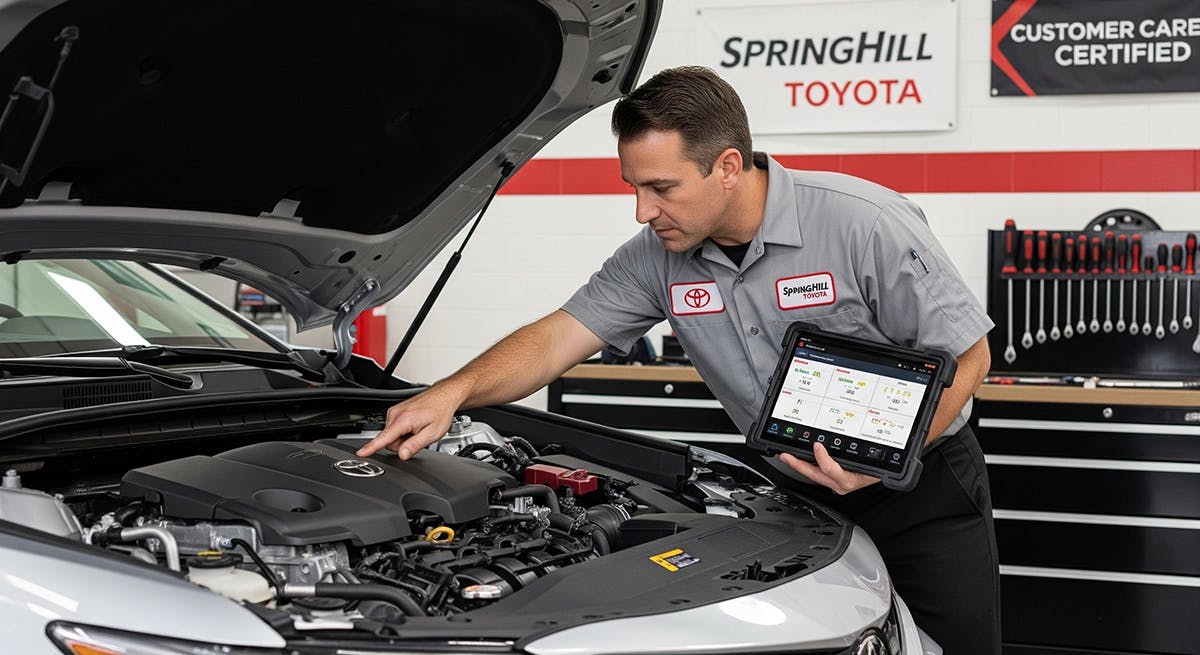
Strange Sounds? Here’s What That Toyota Engine Noise Could Mean
Toyota engine noise can tell you a lot about what may be happening under the hood. Some sounds are minor, but others can point to issues that should be inspected before they become larger repairs.
If your Toyota is knocking, rattling, grinding, hissing, ticking, or clicking, this guide can help you understand what the sound may mean and when to schedule a professional diagnosis at Springhill Toyota in Mobile, AL.
What Does a Toyota Engine Noise Mean?
A new or unusual engine sound can come from several areas of the vehicle, including the fuel system, belts, pulleys, exhaust components, oil system, cooling system, or internal engine parts. The sound itself, when it happens, and whether it changes while driving can help narrow down the issue.
For example, a rattle at startup may have a different cause than a grinding sound while the engine is running. A knocking sound during acceleration may also require faster attention than a brief sound that goes away after the vehicle warms up.
Important: If the sound is loud, sudden, paired with warning lights, or followed by smoke, overheating, loss of power, or a burning smell, it is best to stop driving when safe and schedule service.
Common Toyota Engine Noises and What They Could Mean
Knocking or Pinging
A knocking or pinging sound under acceleration may point to combustion happening at the wrong time. Common causes can include low-octane fuel, carbon buildup, ignition timing concerns, or other engine performance issues.
If the sound continues after using the recommended fuel for your Toyota model, schedule a diagnostic. Persistent knocking can place stress on internal engine components.
Rattling at Startup or Idle
A Toyota engine rattling noise at startup or idle may come from a loose heat shield, worn belt component, timing chain tensioner wear, or low oil flow. If the rattle continues after the engine warms up, it should be inspected.
Drivers around Mobile, Daphne, and Saraland should not ignore rattling that gets louder, happens more often, or appears with a dashboard warning light.
Grinding While the Engine Is Running
A grinding sound can be more urgent. It may be related to a bearing, pulley, alternator, starter, or lubrication issue. If the grinding is loud or constant, avoid continuing to drive until the vehicle is checked.
Hissing Under the Hood
A hissing sound may point to a vacuum leak, coolant leak, or pressure escaping from a hose or line. If the hissing comes with overheating, steam, or a sweet smell, schedule service quickly.
Clicking or Tapping
Clicking or tapping can sometimes happen when oil is low or when valvetrain components need attention. It can also come from accessories or pulleys. Start by checking the oil level if it is safe to do so, then schedule an inspection if the sound continues.
Squealing or Chirping
A squealing or chirping sound may come from a worn belt, belt tensioner, or pulley. This sound is often more noticeable during startup, acceleration, or when using accessories like air conditioning.
Toyota Engine Noise Quick Reference
Use this table as a quick reference when describing the sound to a Toyota service advisor.
| Sound You Hear | Possible Cause | Urgency | Recommended Next Step |
|---|---|---|---|
| Knocking or pinging | Fuel quality, carbon buildup, ignition timing, combustion concern | High if persistent | Use recommended fuel and schedule a diagnostic if it continues. |
| Rattling at startup | Heat shield, belt component, timing chain tensioner, oil flow concern | Medium to high | Check oil level and schedule inspection if the sound remains. |
| Grinding | Bearing, pulley, starter, alternator, or lubrication concern | High | Stop driving if loud or constant and arrange service. |
| Hissing | Vacuum leak, coolant leak, hose issue, pressure leak | Medium to high | Have hoses, fluids, and pressure systems checked. |
| Clicking or tapping | Low oil, valvetrain wear, pulley, accessory component | High if frequent | Verify oil level and schedule diagnosis if it continues. |
| Squealing or chirping | Belt, belt tensioner, pulley, accessory drive component | Medium | Schedule an inspection before the belt or pulley worsens. |
When Should You Schedule Toyota Service?
Schedule Toyota service if the engine noise is new, frequent, getting louder, or happening with a warning light. You should also schedule service if the sound appears during acceleration, braking, startup, turning, or idling.
Even if your Toyota still drives normally, a recurring sound can help a technician catch an issue early. A professional diagnosis can check oil condition, belts, pulleys, fluid leaks, engine mounts, exhaust components, and other possible causes.
Before Your Service Visit
- Note when the sound happens, such as startup, idle, acceleration, or turning.
- Pay attention to where the sound seems to come from.
- Check whether any dashboard warning lights are on.
- Confirm if the sound changes after the engine warms up.
- Share recent maintenance history with the service advisor.
Toyota Engine Noise Diagnosis in Mobile, AL
Springhill Toyota serves drivers across Mobile, Daphne, Saraland, Bay Minette, and the Gulf Coast with Toyota service and diagnostics. Our team can inspect unusual engine sounds and recommend the next step based on your model, mileage, and service history.
Whether you drive a Toyota Camry, Corolla, RAV4, Highlander, Tacoma, Tundra, Prius, 4Runner, or another Toyota model, our service team can help identify the cause of a strange engine noise and support your vehicle with Toyota-approved tools, parts, and fluids.