


Dealership blog

Sienna vs Odyssey: Best Family Van for Mobile
Families cross-shopping minivans in Mobile usually narrow it down to two names: the Toyota Sienna and the Honda Odyssey. Both seat up to eight, both handle school runs and road trips without complaint, but they take very different approaches under the hood. Every Sienna is a hybrid, while the Odyssey sticks with a traditional V6. That single difference shapes almost everything else in this comparison, from fuel costs to towing to how each van drives day to day.
On this page
Sienna vs Odyssey at a Glance
Here is how the two minivans stack up on the numbers that matter most to families cross-shopping in Mobile.
| Spec | Toyota Sienna | Honda Odyssey |
|---|---|---|
| Powertrain | 2.5L hybrid, standard on every trim | 3.5L V6, gas only |
| Horsepower | 245 combined | 280 |
| EPA combined MPG | 36 FWD / 35 AWD | 22 |
| All-wheel drive | Available on most trims, standard on Woodland Edition and Platinum | Not offered |
| Seating | 7 or 8 passengers | 8 passengers |
| Cargo behind 3rd row | 33.5 cu ft | 38.6 cu ft |
| Cargo, 3rd row folded | 75.2 cu ft | 91.0 cu ft |
| Max cargo | 101.0 cu ft | 155.8 cu ft |
| Towing capacity | Up to 3,500 lbs | Up to 3,500 lbs |
| Trim levels | LE, XLE, XSE, Woodland Edition, Limited, Platinum | EX-L, Sport-L, Touring, Elite |
Cargo figures come from each manufacturer’s own published specifications, and Honda measures cargo volume using a different SAE standard than Toyota, so treat the cargo comparison as directional rather than exact. Specs reflect the 2026 model year and change over time. Contact Springhill Toyota for current pricing and trim availability.
Space and Seating
Interior space is usually the first thing families check when comparing these two vans. The Sienna offers three rows of seating in either a 7-passenger configuration with second-row captain’s chairs or an 8-passenger layout with a second-row bench, depending on trim. Higher trims add a second row that reclines with footrests, which is a genuinely nice touch on long drives.
The Odyssey seats eight across the board, with second- and third-row bench seating as standard. Its second row can convert to captain’s chairs if the center seat is removed, giving some flexibility, though not quite the trim-level variety Toyota offers.
Both vans handle daily loading well. Where Sienna pulls ahead is pairing that space with a hybrid powertrain, so families are not trading efficiency for room.

Cargo Flexibility and Everyday Practicality
Behind the numbers in the table above, day-to-day usability comes down to details. Sienna’s third row folds flat with a one-motion Split & Stow mechanism, and the second row slides fore and aft to balance passenger room against cargo space. The Odyssey counters with a larger published max cargo figure and its own fold-flat third row, plus rear-seat monitoring tech that helps parents keep an eye on kids in back.
Sienna offers available hands-free power sliding doors and a power liftgate, both useful when your hands are full of grocery bags or sports gear. A quick loading demonstration at Springhill Toyota can show how either van handles your family’s specific routine, from car seats to strollers to weekend gear.
Technology and Safety
The Sienna comes with the Toyota Safety Sense suite of driver assistance features standard across the lineup, which typically includes pre-collision braking, lane departure alert, and dynamic radar cruise control. Every Sienna also runs on a modern multimedia system with wireless Apple CarPlay and Android Auto, and higher trims add a head-up display and a 360-degree camera.
The Odyssey brings its own strengths here, including a rear-cabin monitoring system that lets parents watch and talk to back-seat passengers from the driver’s seat, plus an available rear entertainment system with a larger display. Both vans are well equipped for family road trips, so the deciding factor often comes down to how each system feels to use in person.
Fuel Efficiency and Ownership Costs
This is where the powertrain difference matters most. Sienna’s hybrid system returns an EPA-estimated 36 mpg combined with front-wheel drive, or 35 mpg with all-wheel drive, thanks to an electric motor that powers the rear wheels instead of a mechanical driveshaft. The Odyssey’s V6 is rated at 22 mpg combined. Over a year of average driving, that gap adds up to a meaningful difference in fuel spending, especially for families who put a lot of highway miles on their van.
Toyota also has a long-standing reputation for strong resale value, and the Sienna specifically is often cited as one of the best-holding vehicles in the minivan segment. Between lower fuel costs and stronger resale, the total cost of ownership tends to favor Sienna over a multi-year ownership period. Contact Springhill Toyota for current pricing on both new and certified pre-owned Sienna models.
Why Mobile Families Choose Sienna
For many families in Mobile and Baldwin County, the decision comes down to how the van fits daily life. Sienna’s hybrid powertrain means fewer stops at the pump without sacrificing the space or towing capacity families need. Reviewers consistently point to its blend of efficiency, comfort, and available all-wheel drive as reasons it stands out in a competitive segment.
At Springhill Toyota, you can test seat comfort, check cargo loading for your specific gear, and compare trims in person. Our team can also walk you through current Sienna inventory, financing options, and available incentives.
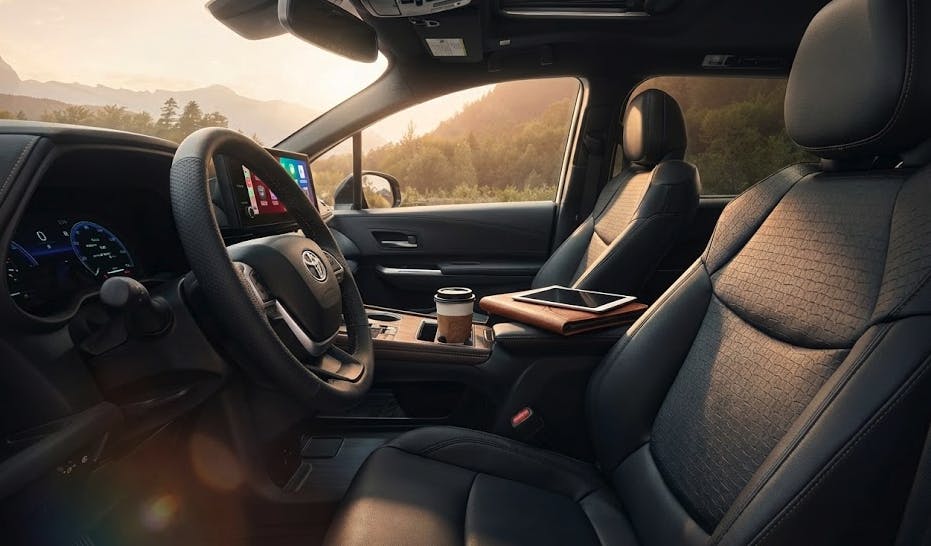
See the Sienna in Person
Compare trims, check current offers, and schedule a test drive at Springhill Toyota in Mobile.
Frequently Asked Questions
The biggest difference is the powertrain. Every Toyota Sienna is a hybrid rated at up to 36 mpg combined, while the Honda Odyssey uses a traditional V6 rated at 22 mpg combined. The Odyssey has a higher published max cargo figure, while the Sienna offers available all-wheel drive, which the Odyssey does not.
Yes. The Sienna is rated at 36 mpg combined with front-wheel drive and 35 mpg with all-wheel drive, compared to 22 mpg combined for the Odyssey. Over a year of typical driving, that difference can mean significant fuel savings.
Yes. All-wheel drive is available on the LE, XLE, XSE, and Limited trims, and comes standard on the Woodland Edition and Platinum. The Honda Odyssey does not offer an all-wheel drive option.
Behind the third row, the Sienna offers 33.5 cubic feet compared to the Odyssey’s 38.6 cubic feet. With the third row folded, Sienna offers 75.2 cubic feet versus the Odyssey’s 91.0 cubic feet. Honda and Toyota measure cargo volume using different standards, so these numbers are best used as a general guide.
Toyota has a strong reputation for resale value across its lineup, and the Sienna is frequently cited as one of the top-holding vehicles in the minivan segment, with the Odyssey following closely behind.
Both the Sienna and Odyssey offer genuine three-row comfort and family-friendly features, but they take different paths to get there. For many Mobile families, the Sienna’s hybrid efficiency, available all-wheel drive, and Toyota’s reputation for reliability make it the easier choice, especially once fuel savings are factored into the total cost of ownership. The best way to decide is to compare both in person.