


Dealership blog
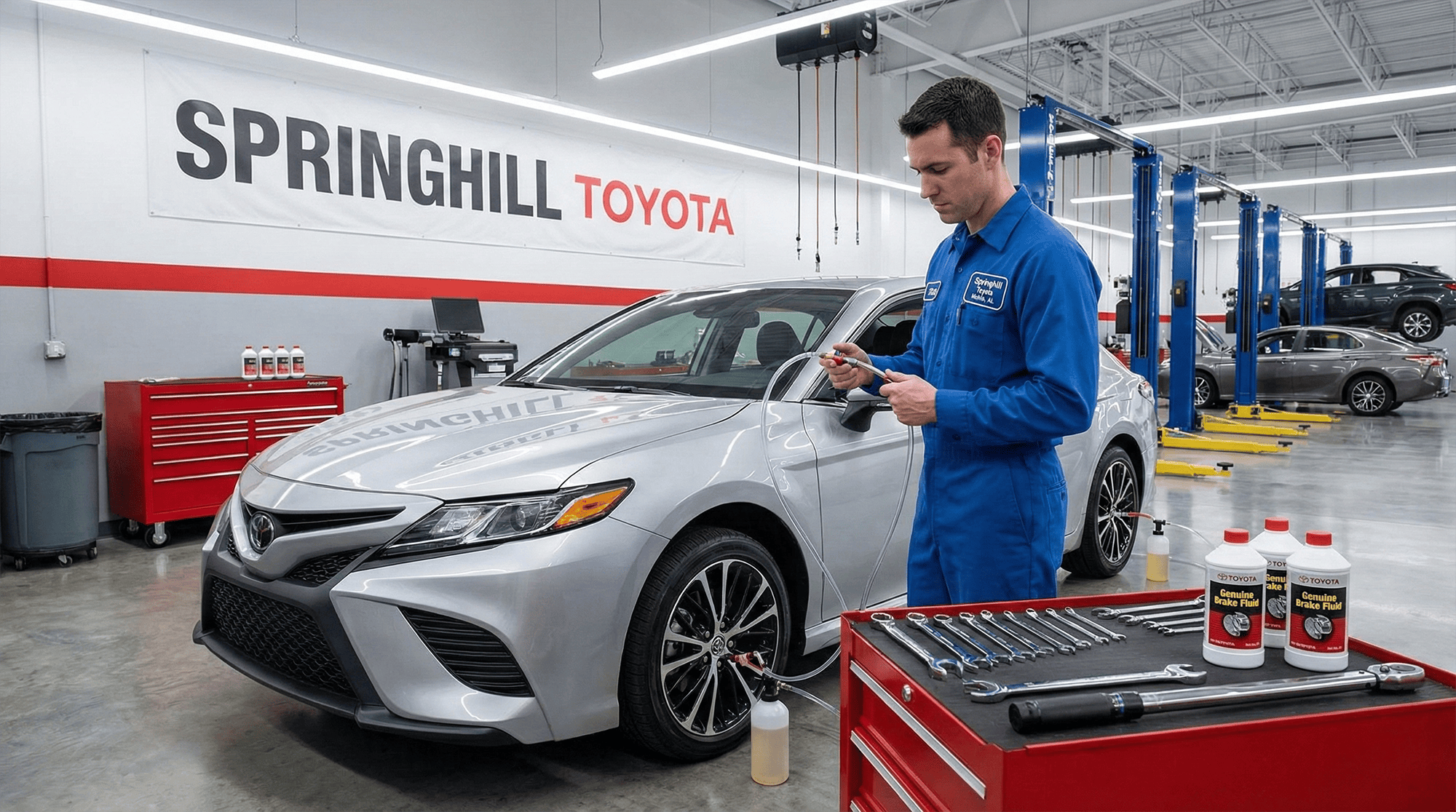
How Do I Know If My Brake Fluid Needs to Be Flushed? Comprehensive Guide for Mobile, AL Drivers
Brake fluid is one of the most important parts of your Toyota’s braking system, but it is often overlooked until a warning sign appears. If you drive around Mobile, Daphne, Saraland, Spanish Fort, Fairhope, or nearby Gulf Coast communities, heat and humidity can make regular brake fluid maintenance even more important.
This guide explains how to know when your brake fluid may need to be flushed, what symptoms to watch for, how long you should avoid driving with contaminated fluid, and why professional brake service at Springhill Toyota Service Center can help keep your vehicle safe and responsive.
Table of Contents
- Recognizing Signs Your Brake Fluid Needs Flushing
- How Long Can You Safely Drive With Dirty Brake Fluid?
- The Importance of Regular Brake Fluid Flushes
- Brake Fluid Flush Costs and What Influences Them
- Recommended Brake Fluid Maintenance Schedule
- Why Choose Springhill Toyota for Brake Fluid Service?
- Brake Fluid Flush FAQ
Quick Answer: When Does Brake Fluid Need to Be Flushed?
Your Toyota may need a brake fluid flush if the brake pedal feels soft, the vehicle takes longer to stop, the brake or ABS warning light appears, the brake fluid looks dark, or it has been about 2 to 3 years since the last brake fluid service. If you notice any braking changes, schedule a professional inspection as soon as possible.
Recognizing Signs Your Brake Fluid Needs Flushing
Brake fluid helps transfer pressure from your brake pedal to the braking components at each wheel. Over time, brake fluid can absorb moisture, become contaminated, and lose effectiveness. This can affect brake response, stopping distance, and overall safety.
Soft or Spongy Brake Pedal
A soft, mushy, or sinking brake pedal can indicate air, moisture, or contamination in the brake lines.
Longer Stopping Distance
If your Toyota takes longer to stop than usual, the brake fluid may not be transferring pressure effectively.
Brake or ABS Warning Light
A brake system warning light can signal low fluid, brake system concerns, or issues that need diagnosis.
Dark or Dirty Brake Fluid
Fresh brake fluid is usually clear to light yellow. Dark brown or cloudy fluid can indicate contamination.
Burning Smell When Braking
A burning odor during braking may indicate overheated brake components or fluid that needs attention.
Grinding, Squealing, or Vibration
Unusual brake noises or vibration should be inspected quickly, even if the issue is not only related to brake fluid.
If you notice any of these symptoms while driving in Mobile, Saraland, Spanish Fort, Daphne, or surrounding areas, it is best to have your brake system inspected by a certified technician. You can use Springhill Toyota’s online service scheduler to book an appointment.
How Long Can You Safely Drive With Dirty Brake Fluid?
Dirty or moisture-contaminated brake fluid should not be ignored. While your vehicle may still be drivable for a short time, the risk increases the longer the issue is left unresolved. Contaminated brake fluid can reduce braking efficiency, increase stopping distance, and contribute to corrosion inside the brake system.
Gulf Coast humidity can make brake fluid maintenance especially important. Drivers near Mobile, Grand Bay, Prichard, Daphne, Fairhope, and coastal areas may benefit from regular brake fluid checks as part of routine maintenance.
The Importance of Regular Brake Fluid Flushes
A brake fluid flush removes old fluid, moisture, and contaminants from the brake hydraulic system. This helps protect braking performance and supports the long-term health of important brake components.
| Benefit | Why It Matters |
|---|---|
| Improved Brake Response | Clean fluid helps hydraulic pressure move efficiently through the brake system. |
| Reduced Corrosion Risk | Removing moisture helps protect brake lines, calipers, and internal components. |
| More Consistent Braking | Fresh fluid supports reliable braking during everyday driving and heavy braking situations. |
| Longer Component Life | Regular service can help reduce strain on brake parts and prevent avoidable repairs. |
During a brake fluid flush, Springhill Toyota technicians can also inspect the broader brake system, including pads, rotors, calipers, brake lines, and related components.
Brake Fluid Flush Costs and What Influences Them
Brake fluid flush pricing can vary based on the vehicle, fluid type, system condition, labor time, and whether additional brake work is needed. In many cases, a brake fluid flush is a relatively small investment compared with the cost of repairing damaged brake components caused by neglected fluid.
Common Cost Factors
- Vehicle model: Some Toyota models may require additional service steps.
- Brake system complexity: ABS and advanced safety systems may affect the process.
- Fluid condition: Severely contaminated fluid may require more time to flush properly.
- Additional repairs: Worn brake pads, rotors, or other components may need separate service.
For current pricing, service availability, and possible brake service offers, check the Springhill Toyota service specials or contact the service team directly.
Recommended Brake Fluid Maintenance Schedule
Many drivers use a general guideline of replacing brake fluid every 2 to 3 years, but your ideal service interval can depend on your Toyota model, driving habits, climate, and maintenance history. If you frequently drive in humid conditions, tow, commute in stop-and-go traffic, or drive in areas with heavy rain, brake fluid checks can be especially valuable.
When to Ask for a Brake Fluid Inspection
- During routine brake inspections
- When replacing brake pads or rotors
- If the brake pedal feels soft or inconsistent
- If the brake or ABS warning light appears
- If the fluid looks dark, cloudy, or dirty
- After several years without brake fluid service
You can schedule brake fluid service at Springhill Toyota or visit the dealership at 3062 Government Blvd, Mobile, AL 36606.
Why Choose Springhill Toyota for Brake Fluid Service?
Springhill Toyota provides professional Toyota service for drivers throughout Mobile and the Gulf Coast. The service team can inspect your brake system, check brake fluid condition, perform a brake fluid flush when needed, and help you stay on track with Toyota maintenance.
Toyota-Trained Service
Technicians understand Toyota braking systems and follow professional service procedures.
OEM Parts Support
Springhill Toyota can support brake service with genuine Toyota parts and approved fluids when applicable.
Convenient Scheduling
Mobile-area drivers can schedule service online and choose a time that works for their routine.
Brake Fluid Flush FAQ
Common signs include a soft brake pedal, longer stopping distance, dark or dirty brake fluid, brake warning lights, unusual brake noises, or a burning smell while braking. If you notice any of these symptoms, schedule a brake inspection.
A common guideline is every 2 to 3 years, but the right interval depends on your Toyota model, driving conditions, climate, and maintenance history. Gulf Coast humidity can make regular inspections especially helpful.
Driving with dirty or contaminated brake fluid is not recommended. It can reduce braking performance, increase stopping distance, and contribute to corrosion inside the brake system.
Fresh brake fluid is typically clear to light yellow. If the fluid appears dark brown, cloudy, or dirty, it may be contaminated and should be inspected by a service professional.
Yes. Springhill Toyota can inspect your brake system and perform brake fluid service when needed. You can schedule an appointment online or call the service team at 251.450.1000.